
When Little Feelings Get Big: Understanding Dysregulation in Preschoolers

January 14, 2026

Understanding Emotional Dysregulation in Preschoolers

Child with very light blonde hair, lying on a colored court, shielding eyes with hands.

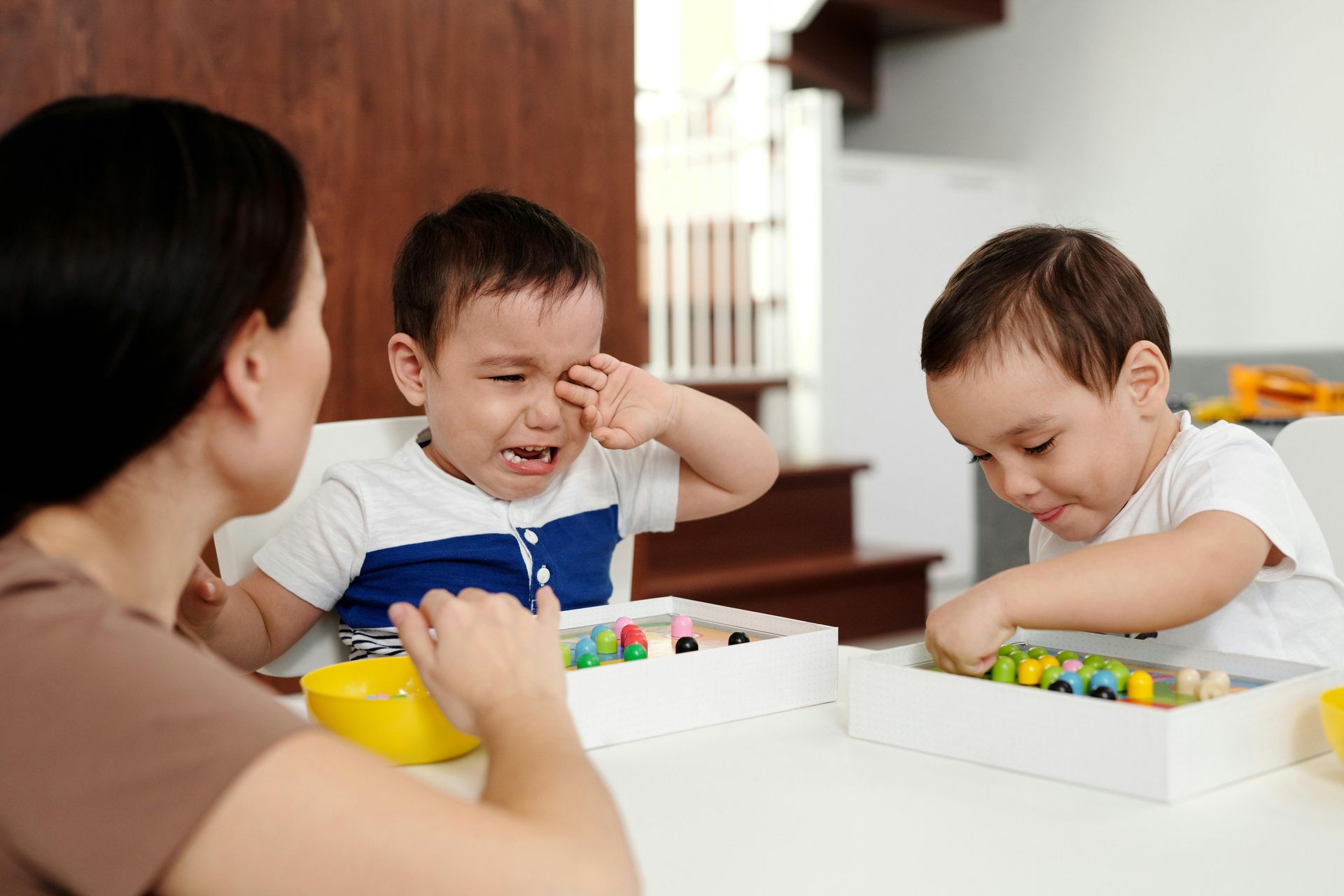
If you’ve ever watched your preschooler melt down because their banana broke in half (been there ), you’ve seen dysregulation in action. Dysregulation happens when young children feel overwhelmed and don’t yet have the skills to calm their bodies and emotions. This is especially common in preschoolers—and even more so for children with disabilities, sensory differences, or developmental delays.

At this age, kids’ brains are still learning how to handle big emotions. They aren’t being “bad” or “defiant”—they’re communicating the only way they know how.

Why Dysregulation happens more for some children:

  • Sensory overload (noise, lights, textures)

  • Difficulty with communication

  • Transitions and unexpected changes

  • Fatigue, hunger, or illness

  • Neurological differences (such as autism, ADHD, or speech delays)

I remember one morning when my child completely shut down because we took a different route to daycare. To me, it seemed minor. To them, it felt like the world had shifted off its axis.

Helping Kids Through Dysregulation

At Robin’s Place Childcare, staff truly understand that behavior is communication. They are trained to recognize early signs of dysregulation and respond with empathy—not punishment. Children are supported before emotions spiral.

Some strategies that help include:

  • Predictable routines with visual schedules

  • Calm, reassuring adult support

  • Quiet spaces for regulation and sensory breaks

  • Naming emotions (“You’re feeling frustrated, and that’s okay”)

  • Consistent expectations paired with flexibility

Dealing with Changes in Routine

Let’s be honest—life happens, and routines change. Snow days, appointments, visitors… it’s a lot for little brains.

Helpful ways to prepare children:

  • Talk about changes ahead of time (“Tomorrow will be different”)

  • Use visual cues or countdowns

  • Keep comforting routines the same (a favorite song, stuffed animal, or goodbye ritual)

  • Allow extra time for transitions

  • Offer choices where possible (“Do you want to walk or hop to the car?”)

Robin’s Place Childcare does an amazing job supporting routine changes by communicating with families, preparing children ahead of time, and offering extra emotional support on harder days.

Final Thoughts

Dysregulation isn’t a failure—it’s a skill still developing. With patience, understanding, and the right support systems (like Robin’s Place), children learn to regulate, adapt, and thrive—one big feeling at a time.

Outdoor patio with pink awning, furniture, artificial grass, and play equipment.
December 29, 2025
Touring a daycare in Mesa? Learn the essential questions parents should ask to choose the safest, best childcare for their child.
Children with backpacks boarding a yellow school bus.
December 10, 2025
Looking for the best preschool in Mesa, AZ? Compare programs, safety, curriculum, and care. Discover why Robin’s Place ChildCare is a top choice for families.