How Consistent Routines Help Children Feel Safe, Confident, and Ready to Learn

Children thrive when they know what to expect. Whether at home or in a childcare setting, routines provide a sense of stability that helps children feel safe, confident, and prepared to learn. While adults often view routines as simple schedules, children experience them as predictable patterns that help them understand their world.
At Robin's Place ChildCare in Mesa, Arizona, routines are an important part of creating a nurturing environment where children can develop socially, emotionally, and academically. From morning arrival to afternoon pickup, consistent daily schedules help children build confidence, develop independence, and learn important life skills.
For many families, routines are one of the most effective tools for reducing stress and helping children succeed both at home and in childcare.
Why Routines Matter During Early Childhood
The early years of a child's life are filled with constant learning and development. Children are learning how to communicate, manage emotions, build friendships, solve problems, and understand expectations.
Because so much of the world is new, children naturally seek predictability.
When children know what comes next, they feel more secure. Instead of worrying about what might happen, they can focus on learning, exploring, and enjoying their day.
Consistent routines help children:
- Feel safe and secure
- Build trust in caregivers
- Develop independence
- Learn responsibility
- Strengthen emotional regulation
- Improve behavior
- Reduce anxiety
- Increase confidence
These benefits extend well beyond childhood and contribute to long-term success in school and life.
How Routines Help Children Feel Safe
Security is one of the most important needs during early childhood.
Children feel safest when their environment is predictable. Knowing when they will eat, play, rest, and see their parents again helps reduce uncertainty.
Imagine arriving at a new place every day without knowing what would happen next. For adults, that uncertainty can be stressful. For children, it can feel overwhelming.
A predictable schedule helps children understand:
- When meals and snacks happen
- When learning activities occur
- When outdoor play begins
- When rest time happens
- When parents will return
This consistency creates emotional security and helps children feel comfortable in their environment.
At Robin's Place ChildCare, children benefit from structured daily schedules that provide stability while still allowing flexibility for individual needs.
Building Confidence Through Predictability
Confidence develops when children experience success.
Routines create opportunities for repeated success because children know what is expected and understand how to participate.
For example, when children follow the same cleanup routine each day, they gradually learn how to complete the task independently. Over time, these small accomplishments help children develop a sense of competence.
Confident children are more likely to:
- Try new activities
- Ask questions
- Explore their environment
- Participate in group learning
- Develop leadership skills
- Build positive relationships
Every successful experience contributes to a child's belief that they are capable and able to handle new challenges.
Routines Encourage Independence
One of the greatest benefits of consistent routines is the development of independence.
Children learn best through repetition. When daily activities follow familiar patterns, children begin to take ownership of tasks and responsibilities.
Examples include:
- Washing hands before meals
- Putting away toys after playtime
- Carrying backpacks
- Cleaning up personal spaces
- Following classroom procedures
- Preparing for rest time
As children become familiar with routines, they require less adult assistance and gain confidence in their abilities.
This independence supports future success both in school and at home.
Supporting Emotional Regulation
Young children are still learning how to understand and manage their emotions.
Unexpected changes can be challenging because children often feel more secure when they know what to expect.
Consistent routines help children regulate emotions by reducing uncertainty and creating a predictable structure.
Children are often better able to handle transitions when they know:
- What activity is ending
- What activity comes next
- How long activities will last
- What is expected of them
At Robin's Place ChildCare, teachers use consistent schedules, visual cues, and gentle reminders to help children move smoothly between activities.
These strategies support emotional regulation and help children develop resilience over time.
The Connection Between Routines and Learning
Children learn best when they feel safe, calm, and engaged.
Routines support learning by creating an organized environment where children can focus on exploration and skill development.
A structured day helps children:
- Stay engaged in activities
- Focus attention
- Follow directions
- Participate in group learning
- Develop listening skills
- Build problem-solving abilities
When children know what to expect, they spend less energy adjusting to change and more energy learning.
This is one reason why high-quality childcare and preschool programs place such a strong emphasis on consistent schedules.
How Routines Support Social Development
Many social skills are learned through daily interactions and predictable group experiences.
Children develop social skills through routines such as:
- Circle time
- Snack time
- Group projects
- Outdoor play
- Cleanup activities
- Story time
These experiences help children learn:
- Cooperation
- Sharing
- Patience
- Turn-taking
- Respect for others
- Communication skills
Routines also help children feel connected to their peers because they participate in shared experiences throughout the day.
Why Sleep and Rest Routines Matter
Rest is a critical part of healthy development.
Children need adequate sleep to support:
- Brain development
- Physical growth
- Emotional regulation
- Memory retention
- Attention and focus
Consistent sleep and rest routines help children understand when it is time to relax and recharge.
At Robin's Place ChildCare, rest periods are structured to help children develop healthy habits while supporting their individual needs.
Families often notice that children who follow predictable sleep schedules are more focused, cooperative, and emotionally regulated throughout the day.
Routines Benefit Children of All Abilities
While all children benefit from routines, they can be especially important for children with:
- Autism spectrum disorder
- ADHD
- Sensory processing differences
- Developmental delays
- Anxiety
- Communication challenges
Predictability often helps these children feel more comfortable and successful.
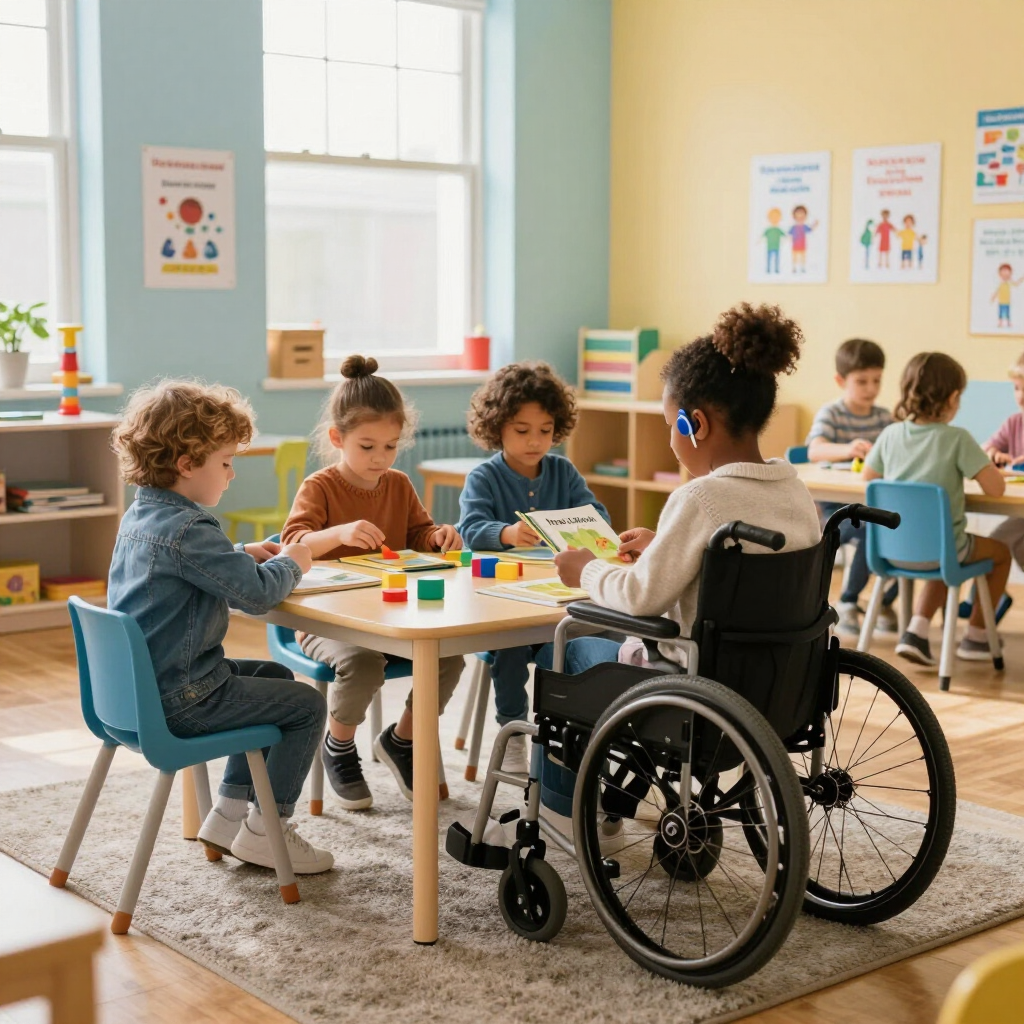
Robin's Place ChildCare is committed to inclusive care and uses structured routines to support children of all abilities. Visual schedules, clear expectations, and individualized supports help create an environment where every child can thrive.
Creating Effective Routines at Home
Parents do not need complicated schedules to create meaningful routines.
Simple, consistent habits often have the greatest impact.
Examples include:
Morning Routine
- Wake up at a consistent time
- Get dressed
- Eat breakfast
- Brush teeth
- Prepare for the day
Mealtime Routine
- Wash hands
- Sit together
- Eat without distractions
- Clean up afterward
Bedtime Routine
- Bath time
- Pajamas
- Reading a story
- Goodnight routine
Consistency is more important than perfection. Children benefit most when routines are repeated regularly.
Managing Changes in Routine
While routines are valuable, life sometimes requires flexibility.
Holidays, vacations, illness, and family events can temporarily disrupt schedules.
When changes occur, parents can help by:
- Explaining changes in advance
- Using visual reminders
- Maintaining familiar elements when possible
- Providing reassurance
- Returning to normal routines as soon as practical
Children often adapt more successfully when they understand what to expect.
Why Mesa Families Choose Robin's Place ChildCare
Families throughout Mesa choose Robin's Place ChildCare because we provide a structured, nurturing environment where children feel safe and supported.
Our programs focus on:
- Consistent daily schedules
- Developmentally appropriate learning
- Social-emotional growth
- Inclusive childcare
- Positive behavior support
- Strong family partnerships
- Safe and engaging classrooms
By combining structure with compassion, we help children build confidence, independence, and a lifelong love of learning.
Frequently Asked Questions
Why are routines important for young children?
Routines help children feel safe, reduce anxiety, improve behavior, and support healthy emotional and social development.
Can routines improve behavior?
Yes. Children often behave more positively when they understand expectations and know what comes next.
Are routines beneficial for preschoolers?
Absolutely. Preschool-aged children benefit greatly from predictable schedules that support learning, socialization, and independence.
How can I create routines at home?
Start with simple routines around meals, bedtime, and mornings. Consistency is more important than complexity.
Does Robin's Place ChildCare use structured routines?
Yes. Robin's Place uses predictable daily schedules that support learning, emotional well-being, and healthy development.
Recent Posts