Why Outdoor Play Is Essential for Healthy Child Development
In today's increasingly digital world, children are spending more time indoors than ever before. Between television, tablets, smartphones, and structured activities, many young children have fewer opportunities to simply go outside and play. While technology can offer educational benefits, nothing can replace the developmental advantages that outdoor play provides during early childhood.
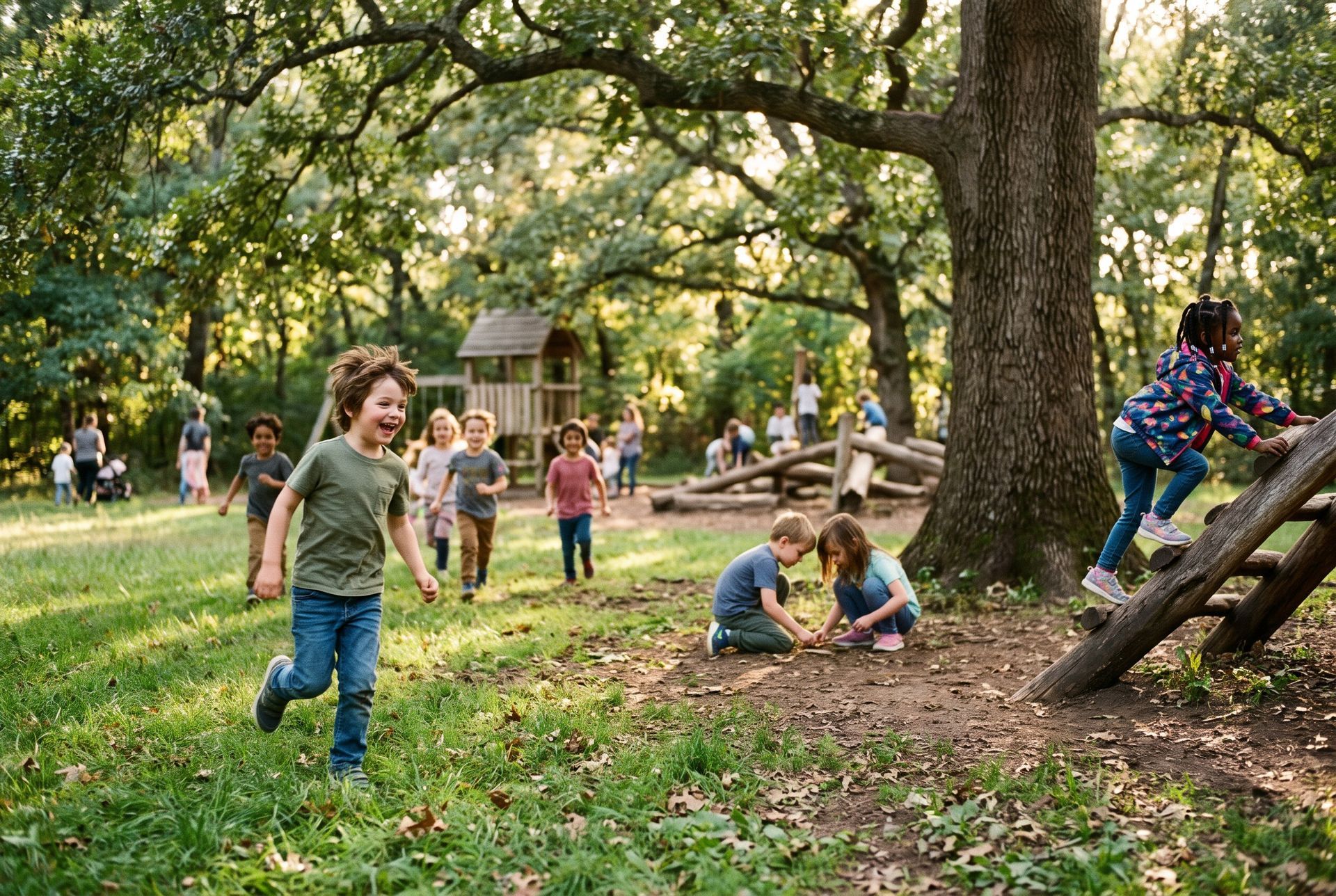
For young children, outdoor play is much more than recreation. It is an essential part of healthy growth and development. Running, climbing, exploring, observing nature, and engaging in imaginative outdoor activities help children develop important physical, social, emotional, and cognitive skills that support lifelong success.
At Robin's Place ChildCare in Mesa, Arizona, outdoor play is an important part of every child's day. We recognize that children learn best when they have opportunities to explore their environment, move their bodies, and engage with the world around them.
Understanding the value of outdoor play can help families make informed decisions about their child's development and daily experiences.
Why Outdoor Play Matters
Children are naturally curious explorers. Outdoor environments provide opportunities to investigate, experiment, and discover in ways that indoor settings often cannot replicate.
Outdoor play allows children to:
- Move freely
- Explore nature
- Take healthy risks
- Develop independence
- Build confidence
- Practice social skills
- Strengthen physical abilities
- Engage their senses
These experiences contribute to well-rounded development across multiple areas of growth.
Research consistently shows that children who participate in regular outdoor play experience benefits that support both immediate development and long-term health.
Physical Development Benefits of Outdoor Play
One of the most obvious benefits of outdoor play is physical development.
Young children need opportunities to move their bodies in different ways throughout the day.
Outdoor activities help strengthen:
- Large muscle groups
- Balance
- Coordination
- Endurance
- Flexibility
- Motor planning skills
Activities such as running, climbing, jumping, balancing, and riding tricycles support gross motor development and overall physical health.
Children who engage in regular physical activity are often better prepared for classroom learning because movement supports brain development, attention, and emotional regulation.
At Robin's Place ChildCare, outdoor play opportunities are designed to encourage active movement while promoting safety and enjoyment.
Building Strong Gross Motor Skills
Gross motor skills involve the large muscles used for movement and physical activities.
Outdoor environments naturally encourage children to develop these skills through activities such as:
- Running
- Jumping
- Climbing
- Hopping
- Throwing
- Catching
- Balancing
These experiences help children gain body awareness and confidence in their physical abilities.
Strong gross motor skills also support future participation in sports, recreational activities, and everyday tasks.
Supporting Fine Motor Development Outdoors
Many people associate fine motor development with indoor activities such as drawing or puzzles, but outdoor play can also strengthen small muscle skills.
Children develop fine motor abilities when they:
- Pick up leaves and rocks
- Dig in sand
- Collect natural objects
- Build with outdoor materials
- Use chalk
- Manipulate playground equipment
These activities improve hand strength, coordination, and dexterity.
Fine motor development supports future skills such as writing, cutting, and using classroom tools.
Outdoor Play Supports Healthy Brain Development
Children learn through experience.
Outdoor environments provide rich opportunities for exploration and problem-solving that support cognitive growth.
When children play outside, they are constantly making decisions, asking questions, and testing ideas.
Examples include:
- Figuring out how to climb safely
- Building structures in a sandbox
- Observing insects and plants
- Navigating playground equipment
- Creating imaginative games
These experiences encourage critical thinking, creativity, and problem-solving skills.
Research suggests that active, hands-on learning experiences support stronger brain development than passive learning alone.
The Connection Between Nature and Learning
Nature provides endless learning opportunities.
Outdoor environments expose children to:
- Weather patterns
- Plants
- Animals
- Insects
- Seasons
- Natural textures
- Scientific concepts
Simple observations can spark meaningful conversations and learning experiences.
For example, a child watching ants carry food may begin asking questions about teamwork, habitats, and how insects live.
These natural learning moments help develop curiosity and a lifelong love of discovery.
Social Development Through Outdoor Play
Outdoor play often encourages social interaction in ways that differ from indoor environments.
Children frequently work together during outdoor activities, learning important skills such as:
- Cooperation
- Sharing
- Communication
- Teamwork
- Problem-solving
- Negotiation
Whether children are building a pretend fort, playing a group game, or exploring together, outdoor play provides opportunities to strengthen social competence.
These interactions help children develop positive relationships and build confidence when interacting with peers.
Emotional Benefits of Outdoor Play
Outdoor play supports emotional well-being in numerous ways.
Children often experience reduced stress and improved mood when they spend time outdoors.
Outdoor environments provide opportunities for children to:
- Release energy
- Practice self-regulation
- Build confidence
- Develop resilience
- Experience a sense of freedom
Many children feel calmer and more focused after spending time outside.
For children who struggle with attention, emotional regulation, or sensory processing, outdoor play can be especially beneficial.
At Robin's Place ChildCare, outdoor experiences help children reset, recharge, and return to learning activities feeling refreshed and engaged.
Encouraging Independence and Confidence
Outdoor environments provide opportunities for children to challenge themselves and develop independence.
Children gain confidence when they:
- Try new activities
- Solve problems independently
- Explore their surroundings
- Take age-appropriate risks
- Accomplish physical challenges
Successfully climbing a structure, balancing on a beam, or navigating a playground obstacle can create a strong sense of achievement.
These experiences help children view themselves as capable and resilient.
Outdoor Play Supports Sensory Development
Young children learn through their senses.
Outdoor environments provide a variety of sensory experiences that support healthy development.
Children may explore:
- Different textures
- Natural sounds
- Changing temperatures
- Smells in nature
- Visual observations
These experiences help children process sensory information and better understand their environment.
Sensory-rich experiences are especially valuable during the early years when children are actively developing neurological pathways.
Reducing Screen Time Through Outdoor Exploration
Many parents are concerned about the amount of time children spend on screens.
Outdoor play offers a healthy alternative that encourages active engagement and real-world exploration.
Instead of passively consuming information, children actively:
- Move
- Explore
- Communicate
- Create
- Problem-solve
These experiences contribute to healthier physical, emotional, and cognitive development.
Balancing technology use with outdoor experiences helps support overall well-being.
Outdoor Play and School Readiness
Outdoor play contributes directly to school readiness.
Through outdoor experiences, children develop:
- Attention skills
- Problem-solving abilities
- Social competence
- Physical coordination
- Emotional regulation
- Independence
These skills help children succeed not only in preschool but also in kindergarten and beyond.
Outdoor play supports the whole child, preparing them for future learning experiences.
Benefits for Children of All Abilities
Outdoor play is valuable for children of all developmental levels and abilities.
Inclusive outdoor environments provide opportunities for:
- Social interaction
- Physical activity
- Sensory exploration
- Communication development
- Confidence building
At Robin's Place ChildCare, we believe every child should have access to meaningful outdoor experiences that support growth and learning.
Our inclusive approach helps ensure all children can participate and succeed.
How Robin's Place ChildCare Incorporates Outdoor Play
Outdoor play is an important part of daily life at Robin's Place ChildCare.
Children participate in age-appropriate outdoor activities that encourage:
- Physical development
- Social interaction
- Exploration
- Creativity
- Problem-solving
- Learning through play
Our outdoor spaces are designed to provide safe, engaging opportunities for children to learn and grow.
We believe outdoor play is not separate from learning—it is an essential part of it.
Why Mesa Families Choose Robin's Place ChildCare
Families throughout Mesa choose Robin's Place ChildCare because we understand the importance of balanced development.
Our programs provide:
- Outdoor play opportunities
- Preschool education
- Inclusive childcare
- Developmentally appropriate activities
- Social-emotional learning
- Experienced educators
- Family partnerships
Most importantly, we create environments where children can explore, learn, and thrive.
Frequently Asked Questions
How much outdoor play do young children need?
Experts generally recommend that young children have opportunities for active outdoor play every day whenever weather and safety conditions permit.
Why is outdoor play important for child development?
Outdoor play supports physical health, social development, emotional well-being, cognitive growth, and sensory development.
Does outdoor play help with learning?
Yes. Outdoor experiences encourage problem-solving, curiosity, creativity, and critical thinking skills that support academic success.
Can outdoor play benefit children with special needs?
Absolutely. Outdoor play can support sensory regulation, communication, physical development, and social interaction for many children.
Does Robin's Place ChildCare provide outdoor play opportunities?
Yes. Outdoor play is incorporated into our daily routines to support healthy development and learning.
Recent Posts